American Classic in Interiors
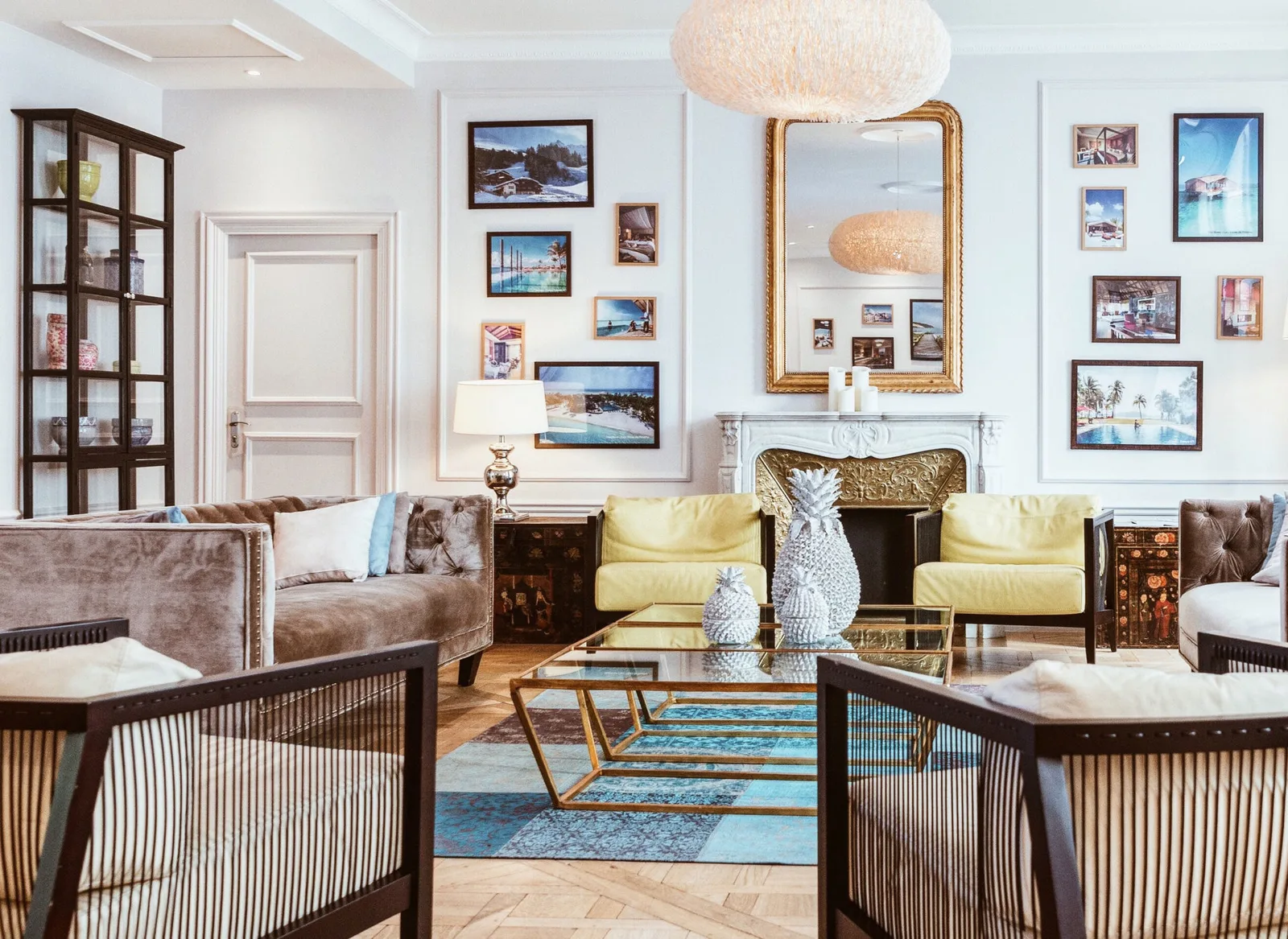
The traditional American style, or American classic, would more accurately be called "American eclecticism", because like the national DNA of the United States it absorbed the heritage of several European cultures, local specifics and original ingredients of its own. American classic is one of the warmest and most comfortable interior styles, and in this article I go through its characteristic features, colours, materials and furniture, and explain who it suits.
The foundation of American classic rests on the principles of French, Italian and English architecture, bounded by American common sense, while keeping the basics of a classical interior untouched: symmetry, proportion, architectural unity, stylistic consistency, natural colours.
Classical European style, colonial style, art deco and country: these are the derivations that came together into one of the most beautiful styles there is, American classic. Interiors in this spirit are eclectic, mix textures and interpret rules freely.
Air and light are the first things that mark the style out. It is easily recognised by its open plans, king-size volumes and the way space is built symmetrically around a notionally chosen centre.
A light living room with a fireplace zone and symmetrically arranged shelving. Mirrors in characteristic brass frames and varied decoration, a Chinese vase, candlesticks, books, boxes, all of which lend charm and refinement.
Characteristic features of American classic
- art deco elements (contrasting colour combinations, contrasting trims, glossy surfaces)
- colonial elements (woven furniture, exotic timbers)
- symmetry in the layout
- paired objects, architectural elements and decoration
- arches and portals are possible
- combined spaces (living and dining, kitchen and dining)
- plenty of natural light, large windows with glazing bars
- dressing rooms rather than wardrobes
Colours
- neutral, complex mixed shades, never pure
- light tones (white, grey, beige) as the background
- dark tones (brown, black, blue, khaki) as accents and trim
Materials and finishes
- wooden floors, mostly dark
- walls painted or papered (botanical patterns, classical motifs)
- pale wall panelling, window and door openings framed with architraves
- smooth plaster mouldings and cornices
- pale doors and skirting (tall, and the taller the better)
- smooth ceilings, with restrained geometric plasterwork as an option
Furniture
- good quality and comfortable, restrained and elegant, generously sized
- mahogany and dark timbers often used in the finishes
- plenty of built-in cupboards with panelled fronts
- window seats with soft cushions
- upholstered furniture in simple shapes and large sizes, in fabric
Decoration
- decorative consoles with a mirror
- botanical motifs in frames, star-shaped or sunburst mirrors in copper finishes
- paired vases, framed photographs, fresh flowers
- curtains in simple classical shapes, often Roman blinds only, plain fabrics
- plain rugs with a dense short pile
Lighting
- accent lighting (wall lights, a pendant over the table)
- paired table lamps, floor lamps
- bronze and chrome finishes on the fittings
Who American classic suits
The atmosphere of this flexible, liberal style, which welcomes self-expression, is built around the world of the owners, with the emphasis on comfort, convenience and a sense of home. It is classic mixed with the contemporary: universal, democratic, a combination of elegance and function, solidity and comfort. It suits people who like a calm classical base but are not ready for museum-like severity, people for whom space, symmetry and the warm feeling of a lived-in home matter. It comes into its own in spacious apartments and houses with open plans. If you lean towards restraint and minimalism, take a look at contemporary style in interiors.
To commission an interior design project in American classic and get an exact price, write to me or call. I go into the interior design project service, what it contains and the stages of the work in separate articles. You can reach me through the contacts page.
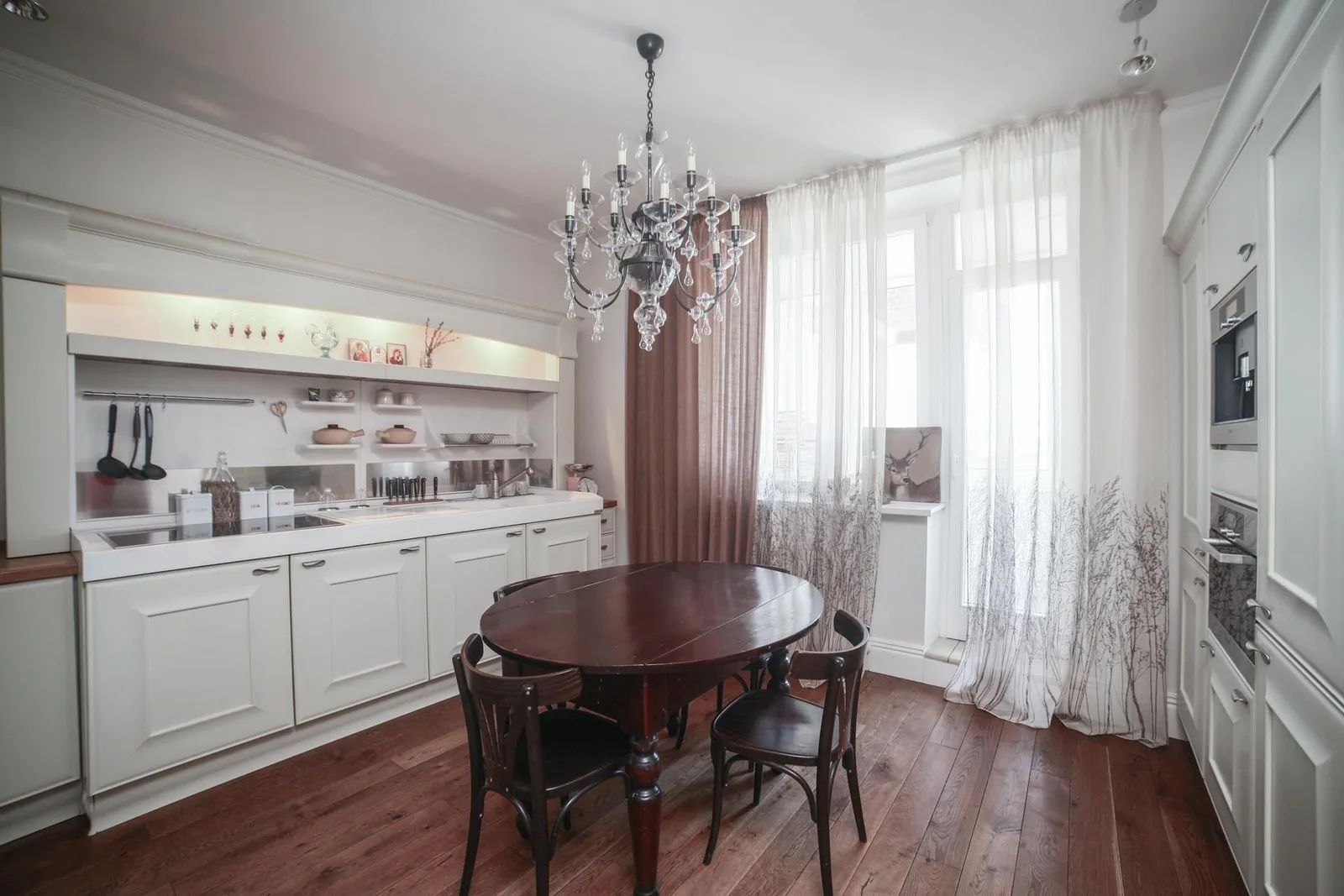
A combined kitchen and dining space, zoned with an island.
Frequently asked questions
How does American classic differ from ordinary classic?
American classic keeps the foundations of a classical interior, symmetry, proportion, natural colours, but interprets them more freely and eclectically. It adds elements of art deco, colonial style and country, and puts the emphasis on open plans, space and everyday comfort rather than formal severity.
Which colours are typical of American classic?
The base is neutral complex shades, never pure. Light tones (white, grey, beige) work as the background, while dark ones (brown, black, blue, khaki) are used as accents and trim.
Who does an American classic interior suit?
People who like a calm classical base with the warm feeling of a lived-in home, who value symmetry, space and comfort, but do not want museum-like severity. The style is at its best in spacious apartments and houses with open plans.