Contemporary Style in Interiors
Contemporary style in interiors is luxurious simplicity: a calm, unassertive interior made for comfortable living. In this article I go through the characteristic features of contemporary style, its colours, materials and furniture, and explain who it suits.
The history of contemporary begins in the middle of the twentieth century. Scandinavian style, constructivism and minimalism laid the ground for it. It is all about a simple kind of complexity.
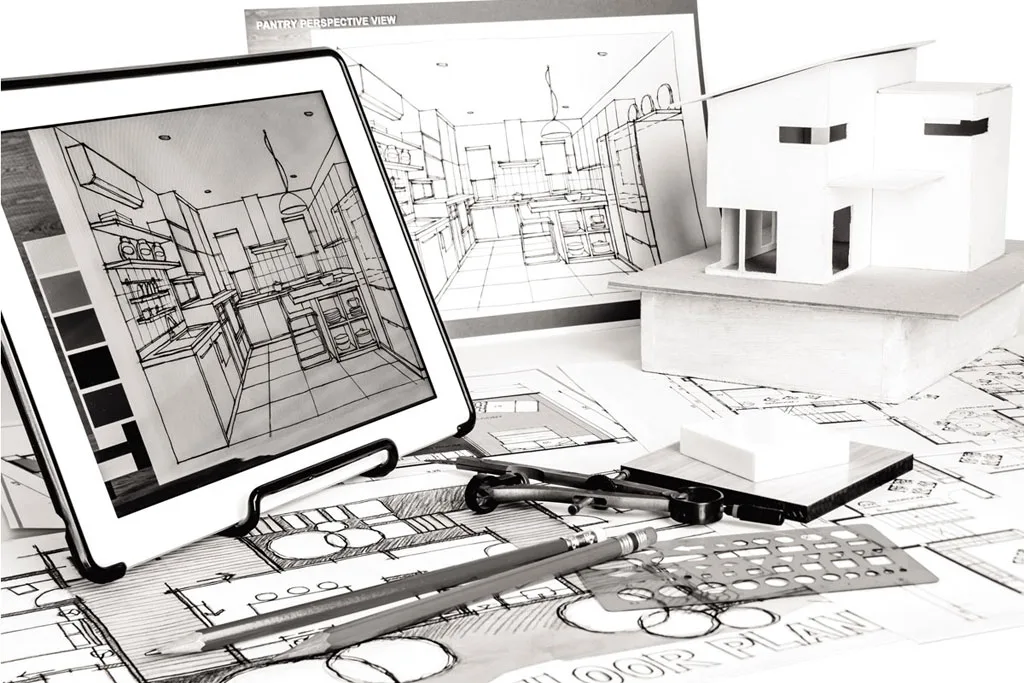
A black and white photograph draws the eye and sets the accents.
Contemporary looked genuinely modern in the interiors of post-war houses. It was also eclectic: traces of other styles were recognisable inside a modern minimalist interior. The ideas of the Bauhaus helped contemporary spread across Europe. The architects and designers who carried those ideas were after mass-produced furniture that was practical and affordable, furniture that could hold a great many things, look stylish and beautiful, and cost a reasonable amount.
This is a style free of any obvious allegiance to a historical period. It takes pride in its simple elegant lines, smooth geometric forms and clean strong angles in everything, from mid-century architectural details to furniture and works of art. There is no place here for ornate ironwork, lacy fabrics or fanciful prints. Nothing should irritate the eye or distract from rest or productive work. Asymmetry is another important part of the design.
"Less is more". Those words of the Bauhaus founder Mies van der Rohe became the classic principle of minimalism, and contemporary carries it forward. The maximum of air, natural light and free space is a non-negotiable condition of an interior like this.
Integrated lighting picks out every volume in the bookcase, an invitation to set off on a new adventure. A luxurious armchair and a footstool make you want to stay with a book, sunk into comfort.
To keep that sense of freedom and space, built-in cupboards and shelving are used extensively, niches are designed in, and appliances hide behind sliding panels. Anything that catches the eye is put away behind doors that disappear into the walls. Only restrained, carefully chosen decorative pieces are left on show.
The absence of a busy colour scheme and elaborate shapes is made up for by a variety of textures. Glossy surfaces (glass, tile, marble, acrylic, chrome, steel, lacquer) are combined with matt materials (wood, stone, natural fabrics).
Natural wood, stone and marble are used widely on walls and floors, and in furniture and decoration. Natural fabrics (linen, cotton, wool, silk) are the ideal complement to elements in ultra-modern synthetic materials. Sea pebbles, rattan, hides and fur, raw stone and timber, anything that returns us to nature, sits beautifully in a contemporary interior.
Characteristic features of contemporary style
- asymmetry is welcome
- graphic, ascetic decoration, with contemporary art in use
- combined spaces, an open-plan feel
- plenty of natural light, large full-height windows
- concealed storage that dissolves into the space.
Colours
- neutral, complex mixed shades that make the perfect base for bright accents
- both light (white, grey, beige) and dark (brown, black, blue, green); an unconventional approach to colour.
Materials and finishes
- floors can be wood or stone (marble, porcelain stoneware)
- walls mostly painted; if papered, then with geometric, graphic or silhouette patterns, usually in restrained shades, though a saturated colour can work as an accent
- finishes include wall panelling, wood, plaster, 3D effects, mouldings in unconventional arrangements, metal, glass
- plasterwork is often absent or takes straight forms; skirtings may be absent or concealed
- doors in simple forms, concealed, running to the ceiling
- smooth ceilings, with restrained geometric plasterwork or 3D forms as an option.
Furniture
- multifunctional, transformable, modular, all in one language
- upholstered furniture in minimalist forms and large sizes, in fabric or leather
- simple lines, right angles.
Decoration
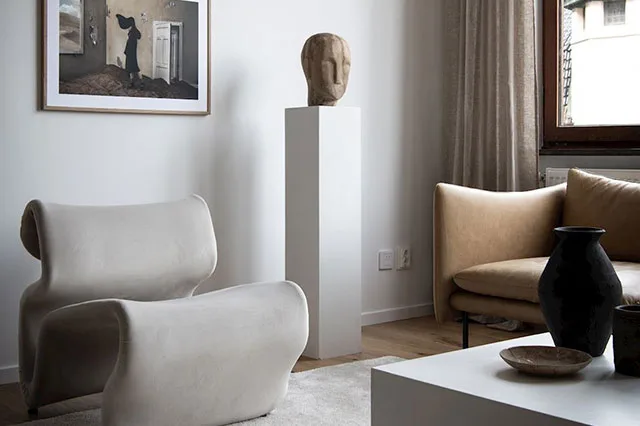
- futuristic sculpture
- vases in unusual shapes, flowers in the form of dried stems or branches
- curtains that are minimalist, functional and simple in form, often absent altogether, plain fabrics
- rugs that are either completely neutral or, at the other extreme, bright, irregular in shape, with an abstract pattern
- large artworks: abstraction, expressionism, cubism, pop art, surrealism, avant-garde, hyperrealism
- photography that is provocative, large, black and white and otherwise, by known photographers.
Lighting
- technical lighting integrated into ceilings and walls
- chandeliers may be absent or take modern, futuristic forms
- copper, gold, chrome and wooden finishes on the fittings.
Who contemporary style suits
Contemporary keeps its resemblance to minimalism and Scandinavian style, but it is richer in texture and fuller of objects, and accent decoration plays an active part as the focal points in the picture of the interior. The style has no rigid limits or strict rules: geometry, graphics, on-trend pieces by cult designers, futuristic sculpture, art objects, plant walls, all of it belongs here and, combined intelligently and harmoniously, produces an ultra-modern design. It suits people who value space, a calm background and order, who like restraint but do not want the full asceticism of minimalism and are ready for expressive accents. It is at its best in apartments with open plans and full-height glazing. If a warm classical base is closer to your heart, read the article on American classic in interiors.
Style: minimalism, mid-century modern and contemporary. Design by Vera Korchagina
To commission an interior design project in contemporary style and get an exact price, write to me or call. I go into the interior design project service, what it contains and how long the project takes in separate articles. You can reach me through the contacts page.
Frequently asked questions
Who does contemporary style suit?
People who value space, a calm background and order, who like restraint but do not want the full asceticism of minimalism and are ready for expressive accents. The style is at its best in apartments with open plans and full-height glazing.
How does contemporary differ from minimalism?
Contemporary keeps its resemblance to minimalism and Scandinavian style, but it is richer in texture and fuller of objects, and accent decoration plays an active part as the focal points of the interior. Minimalism is stricter and more ascetic, while contemporary allows expressive art objects and combinations of texture.
Which materials are used in contemporary style?
A combination of glossy surfaces (glass, tile, marble, acrylic, chrome, steel, lacquer) with matt materials (wood, stone, natural fabrics). Natural wood, stone and marble are used heavily, along with linen, cotton, wool and silk alongside modern synthetic materials.